Provenance. Verified by Bruce and Winnie.
Certified pre-tag Meyers Manx body — Certification No. 494 — restored as a respectful tribute to Winifred “Winnie” Meyers. Period-correct details and authentic early bucket seats preserve the spirit of the Newport-era Manx kits.
Certificates
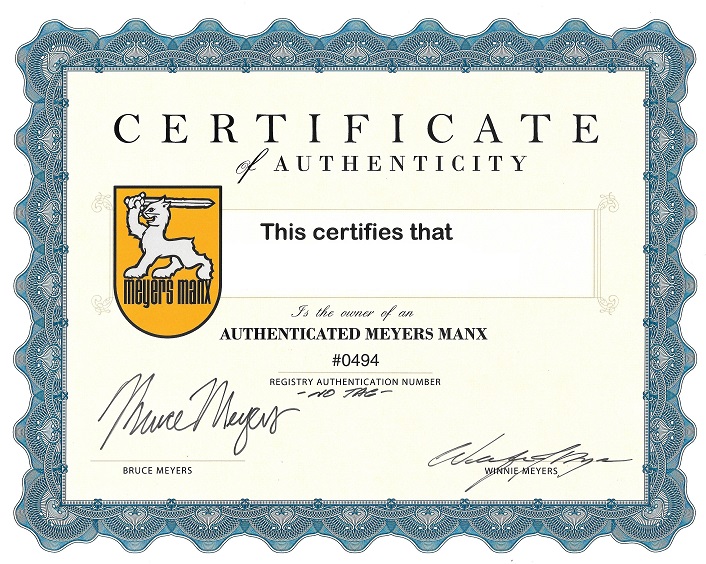
Official certification and supporting documentation establishing the pre-tag provenance of this Meyers Manx body.
Certification Details
- Certified pre-tag Meyers Manx fiberglass body
- Estimated production: 1965 – early 1967
- Early Newport Beach hand-laid construction
Provenance Note
Body No. 494 falls within the earliest production window, prior to standardized tagging. With original molds now retired, and Manx Kits discontinued, surviving pre-tag Manx bodies represent a closed chapter in American automotive history — a hand-built artifact from an era that won’t be repeated.
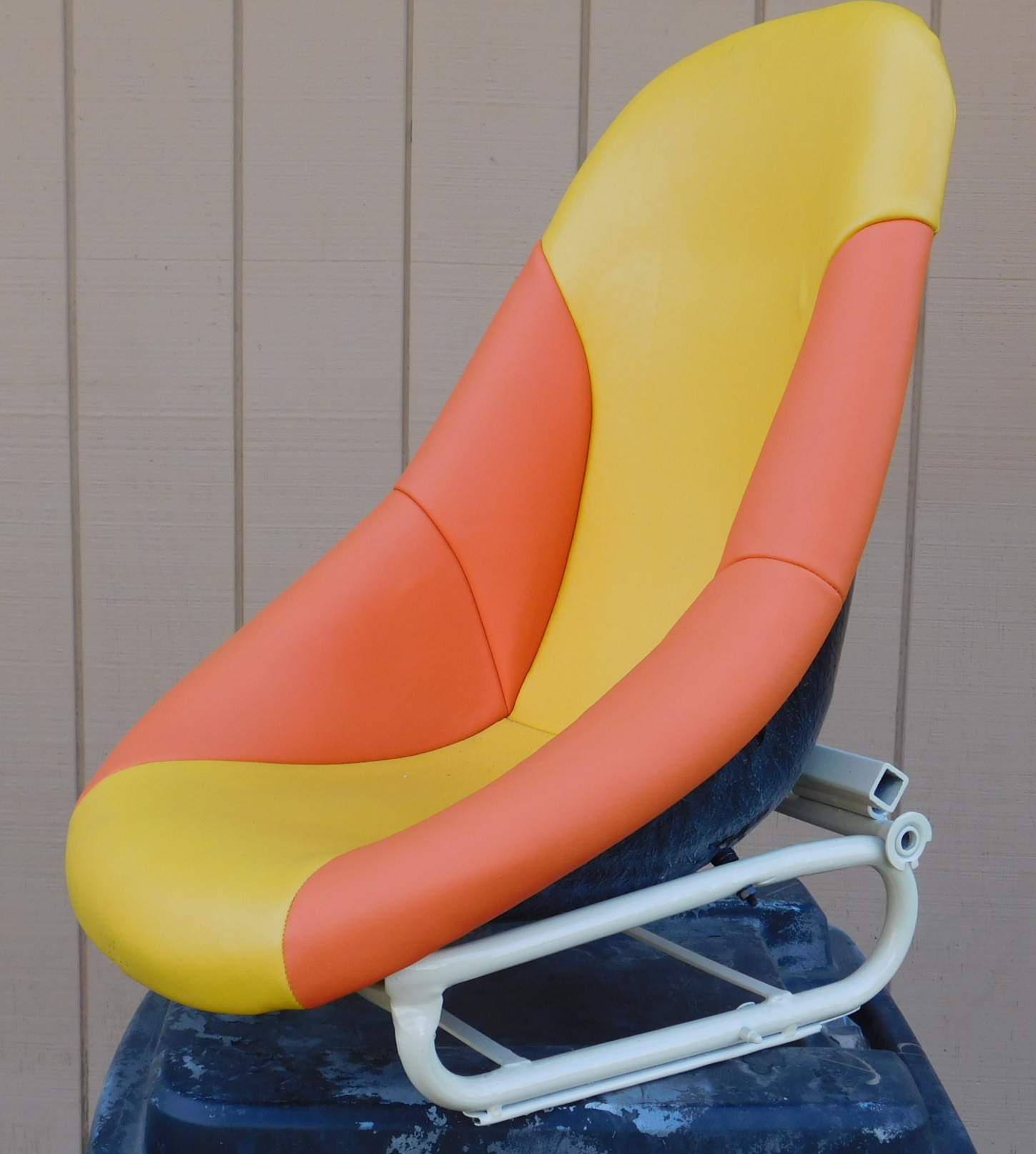
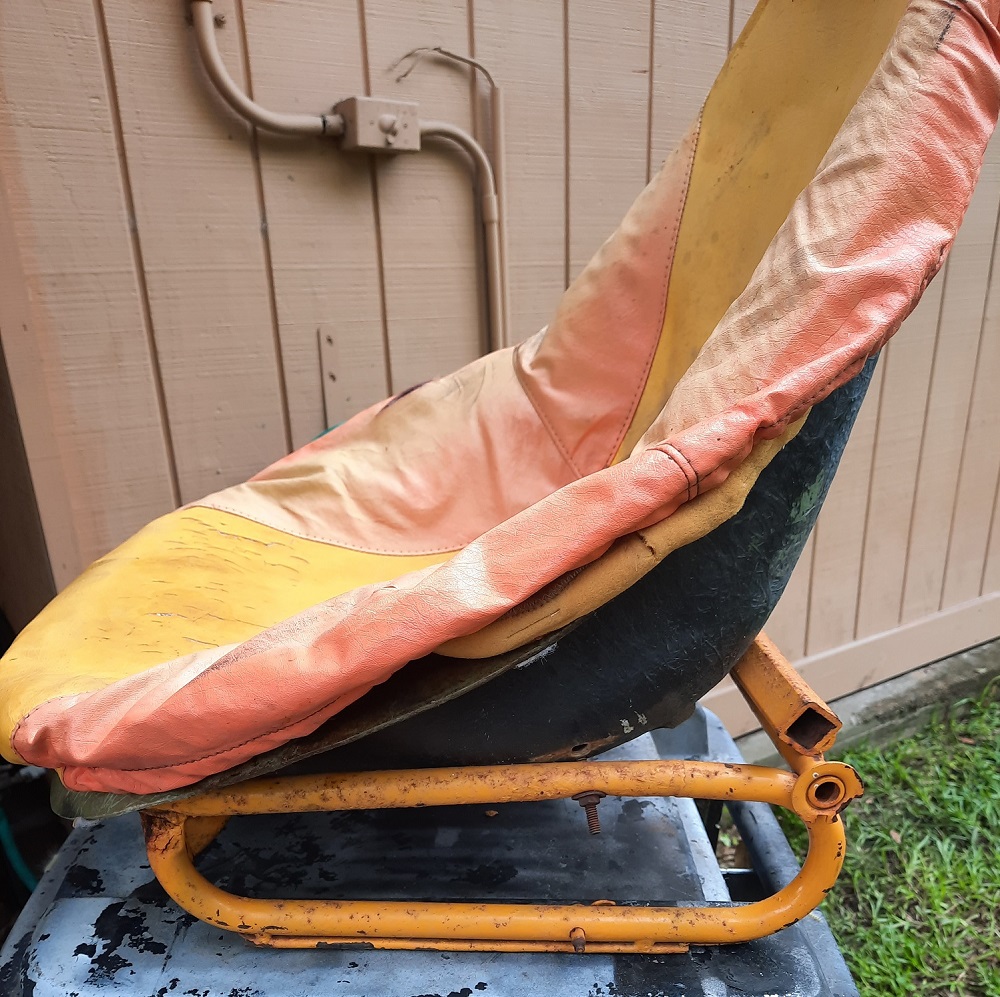
Original Manx Bucket Seats — Provenance and Restoration
Among the most distinctive pieces of Winnie’s history are her original fiberglass bucket seats, believed to date from the pre-tag Meyers Manx era (circa 1964–1967). These seats represent the early “boat-seat” style that B.F. Meyers supplied with some of the first complete Manx kits assembled in Southern California.
Each seat is hand-laid fiberglass, the weave visible beneath the aged resin. The covers are smooth marine-grade vinyl—no pleats or patterns— following the runabout-boat aesthetic that inspired Bruce Meyers’ dune buggy design. The three-panel layout was originally stitched in two-tone Papaya Orange and Yellow.
The tubular steel bases with their forward-tilting mounts are also early-production pieces, consistent with hardware used on pre-tag kits. Later versions adopted smoother shells and standardized mounting, but these retain the handmade character of the earliest builds.
During restoration, every effort was made to preserve the original form and pattern, while refreshing materials in a way that honors their history.
- Marine vinyl in original Papaya/Yellow hues.
These seats are not reproductions—they are genuine survivors of the first era of the Meyers Manx legacy, connecting this tribute build directly to the handmade origins of the world’s most iconic dune buggy.